Origami

Origami
How far will you go to save someone you love?

Friday, 19 April 2013

Media Studies AS level 2013, Foundation portfolio, Main task, Thriller opening, Evaluation. (George Kilby)

Question 1- In what way does your media product use, develop or challenge forms and conventions of real media products?

1. Introduction of character protagonist, unknown to audience who he is or anything about him. Restricted narration. Panning shot.  Long shot helps to set the scene and develop an idea of where the film is set and the surrounding area. Already we are given a snap shot in to the type of social  class involved within the movie.

2. news report, gives information on a kidnapping. Restricted narration. eye level camera angle. Mid shot typical news narration with mise-en-scene being classic to BBC news. BBC background. Emergency news broadcast sends shock waves to audience that the public are being informed about this threat over a public news channel. If the government thought they had the situation under control they would not be issuing a public emergence broadcast encase of causing wide spread panic. This shows the severity of the situation and is a very typical convention of a thriller.

3.BBC website displays information which the audience are unable to decipher. Its an enigma code. Leave the audience asking questions about the rest of the story and how this is going to play a part.  Shows that this story is big enough to make BBC news. enigma coding is a classic convention used by thriller film makers.  

4. CU of a shoe running. Very quick cut to and from this shot giving the scene a fast pace and increasing the adrenaline of the audience. Still restricted narration as the audience doesn’t know exactly what is going on or what has provoked this response from the protagonist. Keeps the audience asking questions and trying to decipher the code. Thrillers are much more than just movies. They ask the audience to play along with trying to predict what may happen next. have the audience try to answer questions that haven't even been asked yet just because they are so eager to read ahead and try to find out what will occur throughout the rest of the movie. 

5. CCTV  footage of the protagonist running along the alleyway. It’s a high angle long shot of the character as he runs. Using CCTV footage gives an idea of the surrounding area. We’re  not out in the country. We must be in a city or a town relatively high population. CCTV footage gives a sense of being watched, by the government as the monitor the area closely? Or by the killer as he watches over head anticipating every move of everyone around him? It is very strategic of thrillers to produce more questions than they answer with a piece of footage. When a piece of footage can make an audience think and feel certain things without them even realising... that is effective filming.
6. long shot, action shot. Typical for action films protagonist physically active and running. saving vital seconds by jumping over rather than running round the fence. this may be a sign that we are approaching our destination. Just generally mindless action and fast paced athleticism for the benefit of the audience. Keeping them excited and involved in the emotions of the character.

7. shot of a school sign. Gives the audience some more information. However produces more questions as to why the protagonist is running into a school. Sets the scene for the next sequence. Suggests a relationship between the character and the person he his running to meet. Maybe a younger sibling? it does set the scene well for the next sequence however it also sets the scene for the rest of the movie. It shows what type of community we are in. Typically middle class school with typical middle class houses surrounding it and generally drip feeding the audience small pieces of information to keep them interested in the movie.

8. shallow depth of field shows an origami swan in the foreground and  protagonist entering in the background. The big enigma code of the opening sequence, this really is the major piece of the whole opening sequence. the audience have been waiting in suspense to find out what will be in the school when our character gets there. they may have been trying to guess... of setting themselves up for a fight sequence. when in reality they get a paper swan. To be frank when writing this opening we did try to see how far we could push the audience because that's what I think a thriller is all about. pushing and pushing the confrontation farther and farther into the film to keep suspense running high. Allow for tension and expectation to build up and then just let it drop with a single shot which just makes the audience think "What the hell is going on?" they question the relevance but on the other hand have a burning desire to uncover the relevance and solve the mystery through these enigma codes.   

9. The name of the film, written in origami font mating the piece of the film. This is where we finally reveal some information. the title foreshadows the entirety of the film. This film is called ORIGAMI, the killer uses origami, the enigma code we were just introduced to was a piece of origami. Now the theme of the film is on full show. The audience still need to find out the relevance, how can the theme be interpreted in different manors throughout the film? What ways can origami be used in this film? To me its all about succession, what comes next and what comes after that. Keeping the audience on their toes.  
 
Question 2- How does your media product represent different social groups?
 
Gender- we have a typical male protagonist who is physically able to run long distances and be decisive in times of peril.  Making difficult decisions quickly and precisely, being active rather than passive. Nearly all thrillers contain stereotypical male protagonists like this. For example-
Age- this is also rather typical, a young protagonist under 40. However challenging the stereotype the age of our protagonist is rather young. Around 18 to be precise, this is to appeal to the target audience who are young adults. The certificate is 16 so setting the age of the main character so young helps attract the younger film goers. This challenges the typical age of the main characters in thrillers as they are usually around mid-20s to early 40s.
Social class- the social class of the main character in our film is middle class. This is portrayed by the style of house they live in, the clothes he wears and the type of school his brother goes to. Although they are middle class both parents have to work full time for long hours to maintain their middle class life style. This explains the close relationship between our protagonist and his sibling as he acts as a primary care giver to the child while the parents are at work.
We structured our character as so due to the frequent use of this representation of masculinity in modern films. We needed our character to be able to act rationally quickly in order for our films to work. In the first setting within our main characters house after receiving information about the kidnappers sequence to the abductions he thinks for seconds before bursting in to action much like any traditional male protagonist within the thriller genre.   

Question 3- What kind of media institution might distribute your media product and why?

 
Going to a small independent film sales agent-
The company’s primary focus would be to act as a sales agent for us by providing the sales and marketing services for the film. The company would acquire the rights to license the film from us for little or no cash outlay. The company then licenses the film to distributors in the various outlets.
There are few significant players in the small independent film sales agent business. The more prominent companies in this sector now focus on larger independent films. Companies such as New Line Cinema, LionsGate, and The Weinstein Company, all began selling and distributing low-budget independent films before being acquired by major studios or going public. As these companies have grown, their business has progressed towards larger budget films therefore we would have to find a very young film sales agency in order for them to take us as a client considering we are a very low budget (no budget) film company. Could maybe be distributed to local cinemas or so small local film festivals. The film could maybe advertised on small local radio stations or in local newspapers to try and get as many people to see it as possible thus increasing the advertising via word of mouth.
Question 4- Who would be the audience for your media product?
The audience for our media would be predominantly male and between the ages of 18-35. The certificate age rating for the film is a 16 allowing younger audiences to still enjoy the film however they may not understand some of the more complex themes involved. The target audience stops short of 40, this I believe is due to the unusually young age of the protagonist. This may limit the age range slightly however it allows a younger audience to find the character relatable. This is very rarely available to the younger spectrum of the audience. 
One of our comments from audience feedback shows that our age certificate rating was pretty accurate and our rather young protagonist does attract the younger viewers and enthral them with the story line. (Refer to quote 1)

However some comments state that our target market was unclear therefore it was hard to make a connection with the film. These comments are fair as I think the age range for our target audience is broad therefore selecting a specific age range is not an easy task. (Refer to quote 2)
Question 5- How did you attract/ address your audience?

Our film contains a lot of quick cut editing and fast paced transitions, especially in the ally sequence where there is a transition roughly every 2 seconds, which helps to excite the audience. To enthral such a young audience they must be kept entertained and interested throughout the piece. Therefore using these transitions to help quicken the pace of the passage increases tension for the audience and they begin to get sucked into the storyline. To keep such a young demographic entertained there must be a piece of action every several minutes opposed to an older target audience where there can be a lot more focus left on emotion and standard situations relatable to real life.


Another way to make sure the audience maintains their interest in the film via the high tension levels is to use clever sound techniques. For example in this frame of the film just as the door slams s hut the music kicks into action with a loud bang to mirror the action of the door. This technique is called Mickey Mousing. As the scene continues and the character gets closer and closer to the destination the music builds getting louder and faster paced, this helps give the audience that adrenaline rush and keeps them deep in suspense about what could happen next.


Any film has to be up to date with modern affairs. In the news recently there have been a lot of child abductions and it is a real life threat that a lot of people worry about and have fears of. So writing a story line based on modern affairs is relatable for most people. Also the fact that the story line is a game of strategy in keeps the audience interested and playing along with the characters and guessing what might happen next. It’s almost like a game within a film where the audience are given clues throughout to keep them guessing and their minds busy.

Also the costume of the actor and the age of the character match well to reach out to our audience. He is just a simple middle class boy around the age of 18. He is unemployed and hasn’t got anywhere to go or anywhere to be. His life is pretty unexciting and in the current economic climate a lot of people that age are stuck in the same rut as our character. Audiences like to find characters relatable and see that their lives are not that different to our own. The scene where it is set is very normal. There is no fantasy or farfetched high-tech special effects. We aimed to create a situation that anyone sat in the audience could find themselves in. This makes it ever more real and scary to the public.

Question 6- What have you learned about technologies from the process of constructing this product?


We used a Sony HD handycam to record all of our footage it contains Full HD, wide-angle G Lens, Exmor R™ CMOS sensor, Wi-Fi ready, Balanced Optical SteadyShot & GPS. We used a tripod for steady shooting.  Whilst using the camera we could practice with techniques that would only allow the audience to see what we wanted them to see. We used camera techniques that restricted the narration and helped create suspense and drama throughout the sequence to keep the audience guessing about what may happen next. Also I learned how to use the camera to effectively track the actor without canting the shot or wobbling the camera
 
Green screen background was used to film the news broadcast sequence, this was a new piece of equipment that we had never used before and found it very useful in getting the effects we were looking for and it really worked allowing us to get the news room background looking as realistic as possible.
 
Editing footage was also something that I had never done before and learning how to cut and trim footage to piece together an opening sequence was an experience. Also trying to make sure that the sequence didn’t have any continuity issues was very time consuming.
Finally the blog its self, which you are reading as I speak was a very fun piece of technology to work with, just posting little bits and bobs on here throughout filming and showing people the side of films they don’t usually get to witness like the story boarding, the planning the research etc was just a very interesting thing to do and taught me how to do things such as attach images and embed video clips. Even writing in blog format is an art of its own I believe.


Question 7- Looking back at your preliminary task, what do you think you have learned in the progression from it to the full project?


, Taking information learned in preliminary and applying it to our thriller opening was very useful to our task. Having the information available to us on the same blog made using the techniques learned in our thriller very simple.

Filming strategies such as the 180 degree rule where the line directly down the centre of the scene must not be crossed by the camera to allow for scene to run smoothly without swapping characters or objects from one side of the screen to the other.

From our preliminary task we learned that the length of shots is of pivotal importance to the piece as a whole. It just allows the audience to access certain information for a specific amount of time. Too short an amount of time and they may be confused by the narrative, and too long an amount of time and it may give away too much information. This can be critical especially within the thriller genre where most narratives run on mystery and suspense throughout. Also you must never linger on a shot for too long, the last thing you want is for the audience to get bored or start to lose interest which can so easily be a problem in long sequences. This is why multiple quick cuts are vital to keep the audience engulfed in the story and to keep suspension high and tension throughout.

For example in our preliminary piece we held this one shot for 50 seconds which slowed down the pace of the scene dramatically.  (image 1) Also the sequence from which this still was taken was done as one long take opposed to a variety of takes from different angles. This may have made our preliminary more aesthetically appealing. (image 2)

However in our thriller opening in our running sequence we had on average a cut every 2 seconds to keep the theme of the film up tempo and exciting. (image 3)
 
Also the setting for our preliminary piece was very limited and we had to improvise with the props and scenery we had available. (image 4) Opposed to our Thriller opening where we had a lot of preparation time in which we were able to carefully plan and choose our setting and props to help reflect the social class of the area and also to make sure they were age appropriate for our protagonist. (image 5) For example using the television and the laptop in the characters home (image 6) allowed the audience to see into the home of the middle class boy. To see his possessions. The audience had opportunities to see inside the life of our character, he was on his way back to his house in the middle of the day.(image 7) This suggests that he is unemployed, he is also living at home so may not have very much of his own money, due to living at home he is very family orientated. these are all pieces of information derived from pieces of mise-en-scene and editing techniques.

Despite our lack of planning time and preparation for our preliminary I think we did rather well with the resources we had available (image 8) and produced some quite convincing costumes. However in our thriller opening I think our time was utilised well to help create a central theme to our piece which helped sew the whole story together. (image 9) I think having a reoccurring element is something that we have learned about writing a gripping narrative. the audience seem to keep an extra special eye out for something they are expecting/ hoping will reoccur throughout the piece.

Evaluation. Q7 George Burtenshaw

7. looking back at your preliminary task, what do you feel you have learned in the progression from it to the full product?

when we did the preliminary task with the immigration officer and the joker, i felt that our film was good. however there was a lot of improvement to be made. when i compare our preliminary film to our final film, you start to realise the improvement in all of us. we have all improved on editting, camera work, sound and use of mise en scene.

in our preliminary you watch it and begin to become rather bored as not much goes on. there is only one type of camera angle which is used in the office. this is over the shoulder shot. through out the prelim there is nothing special about the footage to give it that extra wow factor. for example in our final piece to spicen things up a bit we made a high angle shot look like a CCTV camera shot - which worked really well. also we used the trainer shot aswell which looked really good.


One of my main focuses in the prelim was to concentrate on the lighting. I thought I did quite well. However when you look back at the prelim you realise that there is a non-natural light from the lights. Whereas I think I made a bit of improvement on the final film.

To make our final film that much better we tried using the green screen which worked a treat! And was fun using it. Overall we had much more time making our final film much better than our prelim this is more down to how much more time we had in the final piece. This is why it is that that much better.

Thriler evauation question 6 - Daniel Johnstone


Thriller evaluation question 7 - Daniel Johnstone


7.  Looking back at your preliminary task, what do you feel you have learned in the progression from it to the full product?

I feel that I have learnt a lot since the preliminary task, especially in the 4 areas of camerawork, editing, mise en scene and sound. Of course in the preliminary we only had to include 3 techniques, but in the thriller my group and I brought those techniques and used them effectively, using a variety of shots to illustrate key areas of our film, the extreme close up of the keys to portray a match on action, keeping the 180 degree rule within the classroom and of course something I learnt to do during the film, was a green screen, with it we were able to a create a realistic news report in which told us the story. Of course my editing skills were vastly improved. In the preliminary my editing skills were very amateur, constantly asking for help, but in this opening I rarely ever had to ask, and taught myself  garageband, titling and  how to include copy right free music. So all in all I improved a great amount since the preliminary, teaching how to use garageband etc. but most importantly the 4 areas of camerawork, editing, mise en scene and sound.

The chasing scenes were a lot more exciting than just filiming in a classroom and brought a challenge!

This was our preliminairy, now you compare this setting to our thriller! and how much more exciting it was.

Evaluation. Q2. George Burtenshaw


2. How does your media product represent particular social groups?


Our AS portfolio production represents social groups, such as age, gender and social class. We wanted our character to represent the modern representation of masculinity. Our character needed to make the viewers on the edge of their seat. We did this by making the protagonist calm at the beginning like a normal day. Then he becomes lively when he finds out about the kidnapper.

After doing research on thrillers, we found that the best thrillers have protagonists aged less than 40 years of age. Our character is 18. because our character is this age it could put the usual audience off watching it. A prime example of this is 'Stormbreaker' 2006. I believe that people mainly adults would be less interested in watching this movie when they find out that the main character is meant to be aged 14. How ever the intention of 'Stormbreaker' was mainly aimed at younger people, whereas as our film is aimed at 16's and over.


Our media product represents your average 18 year old. for example here is two prime examples of clothing. on the right picture we can see the protagonist wearing a coat that is branded by Superdry - which perhaps represents the younger persons wear. Casual jeans and on the right picture you see his typical 18 year olds casual trainer. With the top Velcro not in its usual place. This is all part of the teenager fashion.


Thriller evaluation question 5 - Daniel Johnstone


5.    How did you attract/ address your audience?

We attracted our audience it a way it’s, it can happen, on contrast to thrillers such as ‘Inception’ with the whole dream storyline, but ours is something that people can connect with, an example of a thriller would be “Taken” that it is realistic and can happen. With our storyline we gave a mystery and enigma to it that can suck the audience in using props such the green scene, gave the mise en scene more realism as we used it as a BBC report, also the setting was very important, using just a house, an alleyway and a college room made to look like a children’s classroom, again something everyone can connect with. The camera work was used in different ways, for instance in the house, we show high angle shots of him looking at the laptop, confused and suspicious, than as soon as he exited the door, we wanted to use the camera fast paced, so that we could barely even see his face, because we wanted to show the audience how fast he is going and so it could give the feeling of intensity. The mysterious and rather dark storyline is how we addressed our audience, in the way of its realistic and chilling.


Thriller evaluation question 3 & 4 - Daniel Johnstone


3.    What kind of media institution might distribute your media product and why?


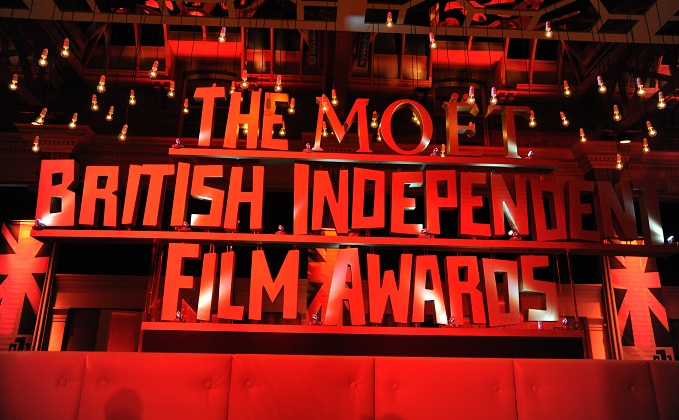
The type of institution that would distribute would be something like British Independent Films, because lets face it, its not exactly blockbuster material! Especially if we haven’t even had a budget, basically what they do is, they’re a indepentant film company, that fund themselves, and people are aloud to show their films at the independent cinema, people will send their films into the industry in hope to win an award to help for further filmmaking. The reason why we would use this, is because independtant, you would stand a MUCH better chance of getting your film recognised say to larger distributions.


As you can see by the picture in the red circle they allow for people to send their video’s and gives filmmakers a real chance and that is the kind of institution we would use.


4. Who would be the audience for your media product?

 
I would have to say the age group for this thriller would be around 13-35, but mainly aimed for 15+ this a film that can grip everyone, with the story we have set, it might be a bit disturbing to with the story line and so that can make it complicated to see what the age range might be, but I think it is around that. Here is what some of our watchers had to say the quotes were “The target audience would be between 15 and 17, I chose this because of the nature of the story being quite upsetting to some who are younger” and “Unfortunately the target audience was not very clear, therefore this could much improved” which I do agree I felt we could of done better addressing our target audience, but our story did give the sense that it was a more ‘mature’ thriller than others. The thriller is definitely for both genders as the storyline is something both can suffer therefore it could connect with them.

Thriller evaluation question 1 & 2 - Daniel Johnstone


1.    In what ways does your media use, develop or challenge forms and conventions of real media products?


I think that our group thriller used aspects and conventions of a thriller, the opening used many techniques to show it was a thriller film, quick example, being the mystery that give, who is the killer? What is going to happen? We crossed this very well in my opinion with fast paced shot of the protagonist running to the school in an attempt to save his it seems to be sibling (we don’t actually say what relation he is to him) but gathering the mise en scene we used, with the setting of the classroom and props such as the cubes gave the hint he/she is his little sibling. There are compasirons of other thrillers such as ‘Taken’ and I like to think ‘Inception’ the way it creates the mystery in the same way and a ‘Taken’s’ perspective of someone actually being taken and the main character has to save the one in distress. I think the sound has an important role in this opening, the non- diegetic off screen soundtrack fits in very well with the fast paced action, in my view the crushendo when he closes the dorrsuited well and started the chase excellently. The theme had darker approach than most, using the green screen for the BBC report we were able to contrust a rather grusome story about a killer, we used sources of the story from the PlayStation 3 game ‘Heavy Rain’. Using editing skills such as pace, we were able to make the chase more believable, quick cuts were key to this and the match on action mixed with the soundtrack changing when he shut the door gave the effect very nicely. The classroom scene in which I mention earlier used a good technique in focus pulling, first it showed the origami figure in focus and the protagonist in a shallow depth of field, only than to reveal him to see the piece this was a great camera techinque to create enigma, also contrasting the compostition and framing of the origami figure. Overall I think it did very well comparing to a thriller, only judgements I think we could of improved, were the lighting, could of made it darker to create the mood.


2.    How does your product represent particular social groups?


In our thriller it does not represent much in the social groups department, apart from the protagonist showing  teenage qualities from an age of around 16-18, for instance you can see his posture in a high angle shot is slumped, as you can see in the picture, in other age groups such as adults between 23-35 you would see a much better posture, back straight and sat up, but with a typical teenager they would slouch, also looking at his clothes, you’d suggest by just looking at what he is wearing he is his teenage years, a labled jacket, brown chino’s and casual looking shoes, this is all part of the mise en scene, body language slouched, not much expression on the face, plus an added prop of a laptop used as soon as he gets home is a typical viewing today, I see this as a more positive view on teenagers today, a negative view would maybe be him smoking, hood up, trousers down a bit, you get the jist of it. Even though we couldn’t particualry display it as we only had 2 minutes, but the protagonist was the brother of the little boy he needs to save, so we made him so he is not see in a negative light as a typical teenager and that he cares for his siblings, and we wanted to share that with the audience, showing the running scenes gave the scent of the care that is shown by him and his determination to get to the school first. As this in this screenshot, you can see him hurry out, with his laptop left on the sofa using a close up of the main character and the laptop in background, this was to outline, the starting point if you will on his chase to the school.


Evaluation. Q6 George Burtenshaw


Evaluation. Q5 George Burtenshaw


5. How did you attract/address your audience?

I think our film is very clever how it could be real. I think this would attract attention from our audience, in many ways I think that because it is so realistic it makes it that much more scarier.  It doesn’t stop there on how it realistic this film is – when you look at the current economy climate you realise how hard it is for anyone to get a job. This is a very similar case to our protagonist. He has no job. He’s around the age of 18 and has no car. His way of getting around is via public transport.

Our film starts as slow pace with no music, to then the music rises which creates attention. To then when the protagonists shut the door hell breaks loose. It changes into a fast pace with less than two seconds in between cuts. To make it more dramatic we added in a cut of the protagonists shoe and a fake CCTV footage when he’s running. We did this to build more tension. Our aims on this scene were for the audience to be on the edge of their seat to find out what happens next.


These are the reasons why the audiance would enjoy our film;
 

  • Realistic - could actually happen to you
  • Mixture of slow pace and fast pace
  • Clever footage - CCTV for example
  • Lots of action
  • Matches current economic climate
  • etc....


Evaluation. Q4 George Burtenshaw

4. Who would be the audiance for your media product
 
I would say our film was aimed at both genders maybe slightly towards males. Our film would be rated a 16. However I believe that your average 12 year old is going to want to see this film. But unfortunately like I said it would be for 16 year olds and up. The reason why it would be for 16 year olds and up is because of the nature of this movie. I guess some would call it ‘scary’ perhaps. As at the end of the day a little kid gets taken, because of this it could scare children.
 
The age group for this film would be 16 – 35. The problem with our film is our main character is 18 which makes it look like a younger persons film. When you think of successful thrillers such as Batman the dark knight you realise that the target audience group ranges from teenagers to OAPs. Again I believe this is due to the age of the characters. Another example of this is Taken – great thriller and the main character Liam Neesan is in his 40s.
 
I think that it is slanted more towards males then females is because of the nature of the film. In most cases, films that have gunshots, or gangsters in or have people dying, you will usually find that it is more of a males film.


Evaluation. Q3. George Burtenshaw

3. What kind of media institution might distribute your media product and why?

British independant films are our most likely change of a distributor. this is mainly down to the fact of the budget we had... nothing. to make our film we needed us four from the group, an average HD camera, effort and edditing equipment. so lets be honest our film would never be in blockbusters.

what do Britsh Independant Films do?

  • give unreconised film makers a chance to become more successful
  • give you a chance to send in your video for the chance to win the award


Evaluation. Q1. George Burtenshaw

Sunday, 14 April 2013

Evaluation Daniel Fairhall


1 – In what ways does your media product use, develop or challenge forms and conventions of real media products.
The genre of thriller is assigned to a film if it displays certain forms and specifications. The way a film is put into the genre of thriller is due to the characteristics that it displays those being suspense, tension and excitement as the main elements, however there is many other subgenres of thriller such as mystery, crime and psychological thriller. The most common type of thriller that we see are crime thrillers as these are usually most successful both at box office and with the audiences some examples include ‘Taken (Pierre Morel, 2008)’ and ‘The Dark Knight (Christopher Nolan, 2008). Although these are the most main stream of thriller genre for which the main theme is crime when we are presented with a psychological thriller the facts are that they are not initially as popular at the box office but then are liked by the audiences usually after DVD release for which the films become what is known as a cult film, such as ‘Donnie Darko (Richard Kelly, 2001). Our aims for what type of subgenre we were aiming to show was a crime thriller and we took inspiration from two sources the first being ‘Taken’ and the second being the PlayStation video game ‘Heavy Rain’ and the theme we were trying to create from this was a twisting storyline which would trip up the audience when they think they know what is going to happen. The way that we displayed this method in our opening was by using no dialogue from the main character as we knew that this way it would be difficult for the audience to determine any response from this character to find out if he was a strong or weak character judging by his behaviour and mannerism in the beginning. We also wanted to make the character as realistic as possible by making the mise en scene completely accurate to our aims which were to create a character between the age of 18-21 who would have a younger brother in order for the storyline to work. The way that we successfully achieved this was firstly by highlighting the age of the character as we needed someone of that age group so we used myself as I fitted this criteria. When we were discussing the costume we looked at mainstream fashion in this age group and we finalised on a typical Superdry jacket and jeans. The props that we used took a lot of thought and effort to make realistic for example in the housing scene we knew that the character was going to be running to the school as we had shot that part of the sequence first, which became a problem when it came to filming the house scene as there is a big drive which fit three cars and two of the cars were there which meant we had to move the cars out of shot and make sure they would not come back into shot. The reason for making this decision not to have cars on the drive was because we thought that it would not be realistic to have a character running to a school to save his little brother from getting kidnapped and as he leaves his house he does not take the car which is sitting on his drive.

2. How does your media product represent particular social groups?
In our thriller opening we discussed a few types of social groups that we could choose and at first we thought of using a female character as the lead there by instead of having a typical mainstream male hero against male villain, however we were unable to find a suitable female lead so we stuck with the mainstream choice of characters. As the story continues after the opening we see the representation of age as the little boy who has been kidnapped does attempt to escape but then we see the elder more experienced character regain the control. Another idea that we had would be that the kidnapper would be revealed towards the end as a woman this would mean that the conflict between genders would be almost flipped as the female character would have a substantial amount of evil power against a male character struggling to save the day. One of my inspirations for having a female villain comes from comic books or super hero films which is emerging as a new sun genre of action, for example ‘Catwoman’ from ‘The Dark Knight Rises’ and ‘Mystique in ‘X-Men 1, 2 and 3’. The way that we aimed to represent the main character is an average male adult who is completely out of his depth in terms of Special Forces training like Liam Neeson in Taken, but instead we tried to make him look like a typical male character. The way we did this was by not having him driving a big car or carry a gun on him but the main factor was that he could not be old so that he would have some sort of experience at something and also that he was not a large person who could kill people with his bare hands.

3. What kind of media institution might describe your media.
The way that I would describe my media would be as an independent opening to a film which fits into the thriller genre. There are many ways in which the film could be distributed, if the film was more high concept and had a higher budget then the ways in which the product could be distributed would be to mainstream cinemas such as Cineworld or Odeon however the film is not high concept and also does not have a high budget there for the film would have to be distributed by independent cinemas such as the Duke of Yorks in Brighton. However I think that the film would be a lot popular if we were to experiment with the distribution of the film and what i mean by this is that the film could be distributed through online methods through film streaming websites such as LoveFilm or Netflix where independent films thrive. Although there are other ways in which the film could gain popularity for example through social networking sites such as Facebook and Twitter, if we were to create a Facebook page about the film then it would be easy for the film to get noticed not just nationwide but in fact worldwide. The other ways that the film would be noticed is by releasing materials such as trailers or ever some back stage extras.

4. Who would be the audience for your media product?
For my media product I feel that the target audience would be between the age of 12-18 as the film does not contain any gore or blood therefore it does not qualify for a high rating so I have chosen to make the film a 12A. So to find films to compare with my own I initially looked at 'Taken 2' which is very relevant to my film as I took inspiration from the first 'Taken' film however this was rated as an 18 so it is irrelevant to our film however the second film was rated as a 12A and was still successful even though it was a drastic change from the first film. If I was to do a study on the types of films I think that my target audience would watch I would have to say that they would watch more mainstream films however because this fits the genre of thriller/action  this is why they are interested in the film, some examples of films I think would be films such as 'Taken', 'Black Hawk Down', 'The Hurt Locker' and 'Zero Dark Thirty' films which are centered around a strong character who is on a mission to either save someone or complete a mission, for example in 'Zero Dark Thirty' the story line is about the search for Osama Bin Laden and the back story of how a female character organises the mission.

5.How did you attract/Your audience/ What aspects of your film did you expect members of your audience to like/understand/empathise with etc?
The way that I attracted my audience was by creating a thriller opening which not only conforms to the thriller genre but also challenges the forms and conventions. I think that the audience will understand and empathise with the situation that the main character is in as most of the target audience will have younger siblings that they would not like to be in this situation. I also feel people would sympathise with this character because nobody would like to see their sibling taken away from them.  I feel that the audience would like the fact that the main character ends up going on an endless and also tireless search for his younger brother in ways emulating Liam Neeson in 'Taken'. I also think that the audience will like the amount of realistic methods that we put into the film for example the news report and the news broadcast in the way that we made it very authentic by initially using a green screen to emulate a news room and then secondly successfully  manipulating a news report on the BBC website.


6. What have you learnt about technologies from the process of construction this product?
What I have learnt from this project is firstly how to uses the camera effectively in order to create different techniques to create suspense for the audience in the scene. The way I have learnt this is by using restricted narration with the help of clever framing and blocking techniques not only to make sure that key elements that would compromise continuity but to create a suspenseful atmosphere for the audience.
What I have learnt from editing is firstly how to string footage together by simply cutting footage short or splitting footage in two in order to put footage in the middle. Some more of the advanced techniques that I have learnt include how to use some visual techniques for example what I liked the most about my editing was how I turn a standard very high angle shot in to a shot which looks like CCTV footage by adding a black and white filter and also slowing down the frame rate which made it look authentic and realistic. I have also learnt how to create a BBC news room by using a green screen, what I had to do was firstly shoot the footage with a completely green back ground and then I had to get an image from google which would make a news report realistic. After I had got all of the all of the things I needed I just had to delete the green background and add in my background after adjusting the sliders is order to adjust the balance levels.

7. Looking back to your preliminary task, what do you feel you have learnt in the progression from it to the full product?
From the progression from the start of the year I have applied all of the techniques that I learnt from the TV drama unit such by applying the four areas of filming and using all that is included in Camera, Editing, Sound and Mise en Scene. I feel that what went better in this task rather than the in the prelim was initially the framing as because in the preliminary task during the shot reverse shot there was a very large gap above the characters head which was just a waist of space. After showing the prelim to the rest of the class we received feedback and we took all comments on board and then applied it to the main task for which I feel went a lot better as we did in fact have a shot which was almost identical to the shot we got wrong in the prelim and we made sure that we would not make the same mistake twice.

Saturday, 13 April 2013

George Kilby Question 5 Draft


Our film contains a lot of quick cut editing and fast paced transitions, especially in the ally sequence where there is a transition roughly every 2 seconds, which helps to excite the audience. To enthral such a young audience they must be kept entertained and interested throughout the piece. Therefore using these transitions to help quicken the pace of the passage increases tension for the audience and they begin to get sucked into the storyline. To keep such a young demographic entertained there must be a piece of action every several minutes opposed to an older target audience where there can be a lot more focus left on emotion and standard situations relatable to real life.


Another way to make sure the audience maintains their interest in the film via the high tension levels is to use clever sound techniques. For example in this frame of the film just as the door slams s hut the music kicks into action with a loud bang to mirror the action of the door. This technique is called Mickey Mousing. As the scene continues and the character gets closer and closer to the destination the music builds getting louder and faster paced, this helps give the audience that adrenaline rush and keeps them deep in suspense about what could happen next.
Any film has to be up to date with modern affairs. In the news recently there have been a lot of child abductions and it is a real life threat that a lot of people worry about and have fears of. So writing a story line based on modern affairs is relatable for most people. Also the fact that the story line is a game of strategy in keeps the audience interested and playing along with the characters and guessing what might happen next. It’s almost like a game within a film where the audience are given clues throughout to keep them guessing and their minds busy.
Also the costume of the actor and the age of the character match well to reach out to our audience. He is just a simple middle class boy around the age of 18. He is unemployed and hasn’t got anywhere to go or anywhere to be. His life is pretty unexciting and in the current economic climate a lot of people that age are stuck in the same rut as our character. Audiences like to find characters relatable and see that their lives are not that different to our own. The scene where it is set is very normal. There is no fantasy or farfetched high-tech special effects. We aimed to create a situation that anyone sat in the audience could find themselves in. This makes it ever more real and scary to the public.